Simple practices to transform Advent gift-giving into an expression of love, gratitude, and shared generosity

Photo by Alemedia
In this season of Advent, we hear the voice of John the Baptist ringing out: “Prepare the way of the Lord, make straight his paths!” (Mt. 3:3). Together with prayer and fasting, one of the suggested penitential practices for this season is almsgiving, which is also a wonderful antidote to the drumbeat of appeals to excessive consumerism and materialism that also emerge during this season.
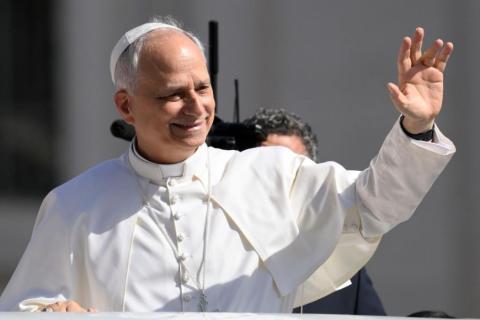
As Pope Leo recently reminded us in his recent Apostolic Exhortation on Love for the Poor, “Whatever form it may take, almsgiving will touch and soften our hardened hearts. It will not solve the problem of world poverty, yet it must still be carried out, with intelligence, diligence and social responsibility. For our part, we need to give alms as a way of reaching out and touching the suffering flesh of the poor.” (#119)
Working with law students, I have long been plagued by the question of how to start a conversation about sharing their financial resources to help meet others’ material needs when they themselves are up to their ears in educational debt. A few concrete practices come to mind.
The first is to make a reasonable budget, and then be attentive to the ways in which God’s loving intervention providentially comes to meet those needs. The difference can then be shared with those in need. When I was in law school, I kept an envelope in which I collected these stories, and the resulting cash to share. For example: Received the gift of a beautiful day with enough time to walk to school, instead of taking the bus = 75 cents to share from the weekly transport budget. Yes, it was 75 cents at the time! Received a nice sweater as a gift from Mom = $20 from clothes budget to share. In this form, my “almsgiving” often felt like a simple “pay it forward” for the experience of love and care already received.
A second practice is grounded in my childhood experience of “Alternative Christmas.” When I was in elementary school, my creative parents were looking for ways to help us kids counter the consumerism that imbued our suburban Los Angeles life. For Christmas they encouraged an exchange of “coupons” with the gift of our time, such as the promise to help with a particular task: e.g., “I will do the dishes or take out the trash when it is your turn.” This practice opened our horizons to myriad ways in which we could express our love and concern for each other as a family.
My favorite coupon, preserved in a family scrap book, evokes the memory of my younger brother who at the time was dashing around in a kitchen apron, convinced of his powers as Superman: “I will tie your cape for you.”
I remember my first year working as a lawyer in a large law firm in New York, which was also my first year living in a Focolare community house in the Bronx. Since none of us had much familiarity with big law firm culture, we were a little apprehensive when it came to holiday gift-giving. There would be no way that our vow-of-poverty budget could afford seemingly appropriate gifts for the particular mentors who had eased my entry into this world. Perhaps emboldened by my childhood experiences, I suggested, how about we try something simple: homemade banana bread. We were all touched by the response: genuine appreciation from colleagues for having shared the precious gift of the time that went into making something homemade.
As we walked out of the hospital, my friend and the lady she helped shared a moment of mutual recognition for the weight of their illnesses. We both felt as though we had received a big gift.
Sometimes running through our minds may be the question of how our efforts to share resources or time will have an impact on family members, or others for whom we may be caring. Often, we are bound together in these decisions: it is not just up to me, my time and my resources are not fully my own. So perhaps a final practice would be to maintain an atmosphere of mutual love that can illuminate our shared decisions about when it is appropriate to give of our resources or time.
I recently accompanied a friend from my Focolare house to the hospital for a medical test that I knew had been difficult for her in the past. My very specific job was to care for her and make sure she got home safe. While I was in the waiting room, I witnessed an encounter between a distraught lady who spoke only Spanish and a frustrated receptionist unable to communicate with her. I was not confident that my inability to speak Spanish would not make a total mess, especially in a medical setting, so I did not step in.
My friend, whose Spanish was better, would be out shortly. But would she be in any condition to help? When she emerged, perhaps because of the love between us, I could tell that it would be fine to lean into her for this gesture of kindness. She was able to help her sort through the problem, also leaving the receptionist with a wide smile of relief. Then, as we walked to the hospital entrance, my friend and the lady shared a moment of mutual recognition for the weight of illnesses they were carrying, and they had an encouraging exchange. When we got into the car to drive home, we both felt as though we had received a big gift.
Mutual love helped us to “make straight his paths”—and in so doing, we experienced the joy of sharing the gift of ourselves with others.