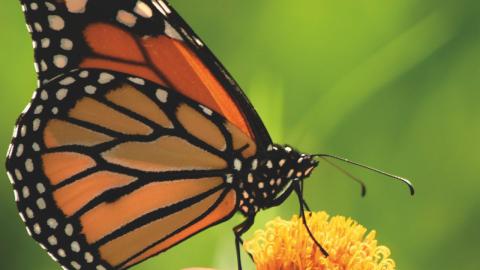
Photo by By Benjamin Davies on | Unsplash
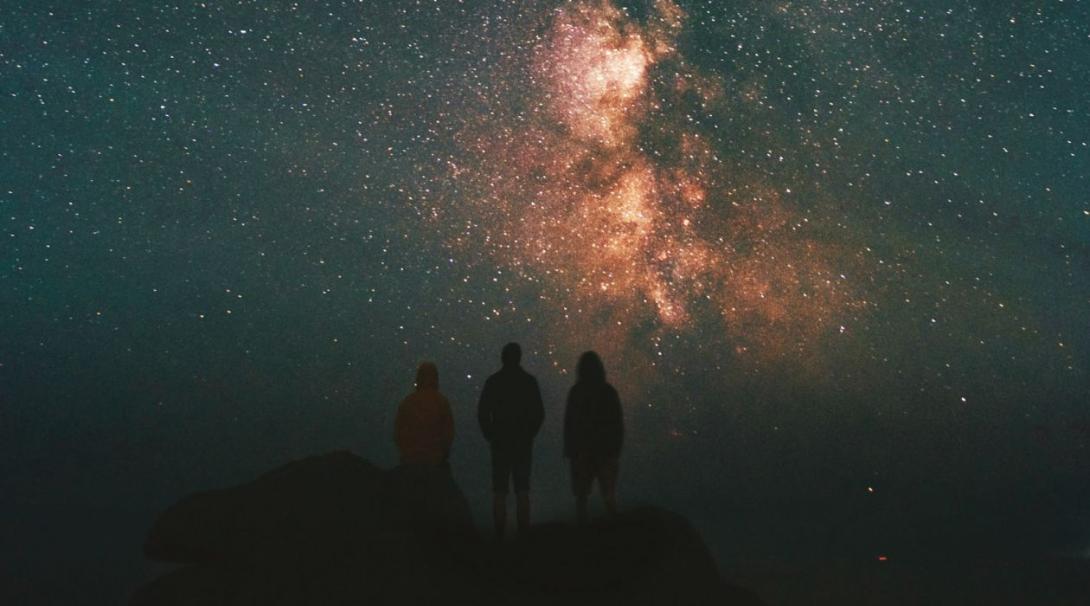
To be human is to value what we see and disregard what we don’t. This tendency leads us to overlook and undervalue essential aspects of life: our health, families, the environment. We don’t realize what we’ve lost until it’s gone. Even if we care about the environment and work for a more sustainable world, I don’t believe we can truly care about something if we don’t recognize its full value. And we can’t know the value of something we don’t see, which is why it’s essential to pause and look up at the night sky.
Society tells us to rush, to produce and consume more. Most of what we see—on our phones—feeds us the belief that we need more, pushing us to work overtime to obtain it. But then we forget to stop and look.
I just finished my first year of college. I took extra credit and challenging courses. By the end, I realized I hadn’t seen much of anything beyond my computer screen. I was so focused on my GPA that I found myself completely burned out. By days’ end, I didn’t want to do anything meaningful. I gravitated toward social media, stopped taking care of my body, and felt too drained from studying to spend time with friends. I wasn’t getting enough sleep, and wasn’t feeling fulfilled.
Being outside strengthened my faith in God when I was a child. Getting a phone in high school changed me. I stopped feeling grateful for what I had and lost a lot of creativity. Phones drive our desire to purchase, and crush our creative instincts. Instead of being good stewards of the natural world and our wellbeing, we sacrifice its beauty for convenience and cheap dopamine. No one benefits except corporations. Consumerism and capitalism are not inherently bad—it’s the way we engage in them that is problematic. For example, when we turn to purchase, we ought to support businesses that aim to operate sustainably.
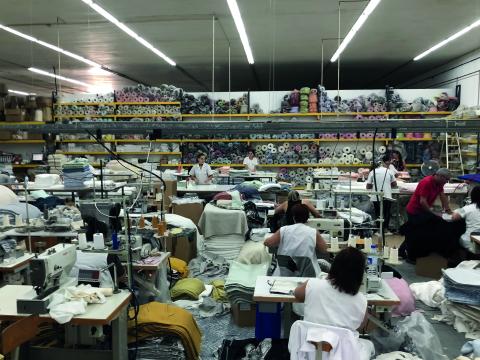
Work also overwhelms. Wages often don’t match the cost of living, and there are fewer job opportunities for new graduates. Many college students feel uncertain about their future. There’s a growing concern that jobs will be replaced by AI, rendering our degrees obsolete. In that context, it’s no wonder some of us turn to AI to do our homework. It’s not that young people are suddenly lazy or immature; it’s simply practical. If my work is not worth much and can be replaced by a robot, why not use a robot to do my homework?
If society doesn’t respect the human person as irreplaceable, why would we believe our thoughts, ideas, and inspiration are worthwhile?
Pursuing academics requires valuing the dignity of that labor, something society doesn’t seem to recognize or reward. If society doesn’t respect the human person as irreplaceable, why would we believe our thoughts, ideas, and inspiration are worthwhile? Why would a student choose to develop their intellect when society deems it worth so little? Why not take the easier route and use ChatGPT?
I feel most alive when I’m writing or thinking. However, degrees in English, Philosophy, or Theology have few job prospects. Students are often discouraged from pursuing their passions due to economic pressures. This saddens me. I believe that if someone is genuinely passionate about something, that talent and spark are God-given, and they should pursue it, not be stifled by economic conditions that view their talent as useless.
We live in a physical world that’s withering materially. Our planet is suffering not just economically. But perhaps we don’t notice because we’re too busy staring at our phones, dreaming about other people’s lives.
I’ve wanted to delete Instagram so many times in college. Every time I try, I feel guilty, as if I’ll lose touch with people or the world. Still, I believe that the more time I spend watching friends’ and families’ Instagram stories, the more jealous I become, without really knowing what’s going on in their lives. A phone call would be a more effective and human way to stay connected. I’ve posted countless aesthetically pleasing Instagram stories on days when my life was falling apart. Social media often hides reality so perfectly that we can’t tell what’s true.
I also used to try to be productive every second. But while it’s important to use our God-given talents, I don’t think God created the world so we could shut ourselves away from it. I overlook sunset, often choosing Netflix instead. The real questions are: Do I feel alive? Am I really living?
Maybe ChatGPT would have written a better article than I did...However, it has never gazed up at a night sky full of stars or felt overwhelmed by the weight of the world.
In one of my English classes this past spring, the professor had us watch Eraserhead. It was jarring and frankly depressing, but one image stuck with me: a window looking out onto a brick wall. Later that day, while studying for my biology final, I looked out the window of my dorm’s study room and saw a brick wall. It struck me that the soul conforms to the environment in which it lives. Beautiful spaces inspire higher thoughts, while plain, sterile spaces like my freshman dorm unfortunately crush the spirit. The most extraordinary beauty is outside, not online or in buildings. Without seeing the natural world, we are, in a sense, prisoners.
We are pressured to chase the highest-paying jobs. Sometimes I would love to be a writer, but that doesn’t fit neatly into the system. So I’ve spent a significant amount of time this year trying to “fix” myself to achieve better grades, become smarter, toward earning more money. And what I miss most is going outside, or going to mass with my family on Sundays, without constantly thinking about my to-do list for the week.
There seems to be little room for trial and error. As students, we believe we must earn good grades to succeed and so we’ll do whatever it takes, even if it means cheating. There’s little room to be ourselves, to argue, to reason, to love something passionately. There is time for entertainment that shortens our attention spans. There are jobs we hate. There is studying for degrees we don’t really want. And there is wondering, Is it nice outside today?
There are no signs that this will change. The globe will become more polluted. The beauty of consumerism will mask the lost beauty of the natural world. I will probably never delete Instagram or stop wishing I looked more like the modern beauty standard. But at least I can still write, speak, and reason. We all can. We can all pause and take a break before it’s too late. We still have vision. We still have life in our bodies. What a tragedy it would be if all we did with our lives was wish we were more or wish for more, and in doing so, lose the inheritance we already have: this planet, this life, this beauty.
All I ask is that no matter what age you are, you stop and think about whether your life is fulfilling to you before it’s too late. I ask that you go outside at night and look up at the stars again, and live fully.
If you are a college student, I ask that you use your mind to its fullest potential and learn that if you fail, you at least engaged in that intellectual labor that shapes a person; even if you fail, you’re a bit stronger and more resilient than when you embarked on the assignment.
The next time you want to use AI for a paper, please give yourself an hour with a blank Word document first. Don’t stifle your thoughts with pop music, and lock your phone away somewhere. Allow yourself an hour to be fully human and utilize the gift of self-expression. If you feel moved to write, it doesn’t have to be brilliant; maybe it is enough that you were alive with a blank page, even for an hour.
Maybe ChatGPT would have written a better article than I did, with stronger points and more eloquent sentence structure. However, it has never gazed up at a night sky full of stars or felt overwhelmed by the weight of the world. Yes, AI would have written this article faster than I did, but it has no choice in the matter, and choice is what makes us human.